Blaze & Budget

SITKA Gear Alternatives on a Budget

SITKA's own case for itself is GORE-TEX and a product-lifespan guarantee. Four budget pieces that cover the same three jobs, and a straight account of the one job they do not.

By Stephen V.Last updated How we rank

If you want one purchase that replaces most of a SITKA cold-weather system, buy the TIDEWE Silent Hunting Suit: a quiet-fabric jacket and bibs together, for about what a single premium jacket costs. The budget pick — and the piece to buy first if you buy only one thing on this page — is the Thermajohn fleece-lined base layer set. It is the highest warmth-per-dollar item on this entire site, and it does more for a cold sit than any outer layer.

Credit where it is owed, and it is owed. SITKA’s argument for its price is specific and it is not marketing fluff: GORE-TEX, which the company describes as acting “as a one-way valve that allows sweat and moisture to escape from the inside” “while completely sealing out rain and snow,” and which it says it can test in GORE-TEX’s own labs for “waterproofing and durability.” Behind the product it says “We stand behind every product we make,” offering repair or return if you are not satisfied on receipt and repair of wear-and-tear damage at a reasonable cost.

That is a real thing to be paying for, and this page is not going to pretend a $30 base layer is a GORE-TEX shell. What it will do is separate the three jobs hunting clothing has to do, show you which two a budget kit covers properly, and be honest about the third. Prices come from the live price layer with the date they were read, shown in the ledger below. Here is how we rank.

How this is funded: we earn a commission if you buy through our links, at no extra cost to you. It never changes which product we recommend, and we’ll tell you plainly when we’d skip one. Full disclosure.

Four pieces that cover the same three layers

Ranked on price-per-performance — the specs that matter divided by what it costs. Select a row to jump to the full write-up. We have not field-tested these — here is exactly what we do instead.

#ProductLayer / piecesScorePrice
1
TIDEWE Silent Hunting Suit (jacket + bibs)

TIDEWE Silent Hunting Suit (jacket + bibs)

Closest to a whole system, in one purchase

A quiet-fabric jacket-and-bibs set for the price other brands charge for the jacket alone. It is the single fastest way to kit out a new stand hunter for cold weather without spending KUIU money.

Silent jacket + bibs
9.0/ 10
$135.99View on Amazon

$209.9935% off

Price as of November 22, 2026. #ad How we’re funded

2
King's Camo Hunter Wind-Defender Fleece Jacket

King's Camo Hunter Wind-Defender Fleece Jacket

Best wind layer from a hunting brand

A wind-blocking fleece from an actual hunting brand, in patterns built for Western and open country. The mid-layer that quietly does most of the work on a cold, breezy sit.

Wind-defender fleece jacket
8.7/ 10
$99.98View on Amazon

Price as of November 22, 2026. #ad How we’re funded

3
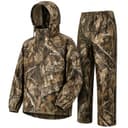
Frogg Toggs Classic All-Sport 3-Layer Rain Suit (AS1310)

Frogg Toggs Classic All-Sport 3-Layer Rain Suit (AS1310)

Best cheap answer to the rain shell

The default answer for a hunter who does not want to think about rain gear twice. It is a full camo jacket and pant, every seam is taped, and the whole suit costs about what one piece of premium rainwear costs. The fabric is the trade you accept: the maker describes it as quiet and supple, but it is a nonwoven polypropylene rather than a woven shell, and it will not shrug off briars.

Jacket + pants
9.2/ 10
$56.99View on Amazon

$79.9929% off

Price as of November 22, 2026. #ad How we’re funded

4
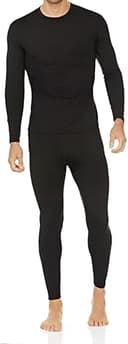
Thermajohn Fleece-Lined Base Layer Set

Thermajohn Fleece-Lined Base Layer Set

Buy this first

The cheapest upgrade that makes the biggest difference. A fleece-lined base-layer top and bottom under your camo does more for a cold sit than any single outer layer — and it costs less than lunch out.

Fleece-lined base layer
8.8/ 10
$26.99View on Amazon

$39.9933% off

Price as of November 22, 2026. #ad How we’re funded

The picks in full

#1Closest to a whole system, in one purchase9.0/ 10 value

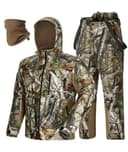
TIDEWE Silent Hunting Suit (jacket + bibs)

A quiet-fabric jacket-and-bibs set for the price other brands charge for the jacket alone. It is the single fastest way to kit out a new stand hunter for cold weather without spending KUIU money.

Strengths

  • Jacket and bibs together — a full outfit in one purchase
  • Silent brushed fabric that will not scrape against a stand
  • Fleece-lined and warm enough for firearm-season stand sits

Trade-offs

  • Bulky and warm — too much for early-season or active hunts
  • Sizing runs large; size down if you are between sizes
PiecesJacket + bibs
FabricSilent brushed, fleece-lined
Best seasonLate / firearm season

Specs read from the product listing, on August 10, 2026. “Not published” means the maker doesn’t state that figure. The score is our value rating, not a lab test — how we rank.

#2Best wind layer from a hunting brand8.7/ 10 value

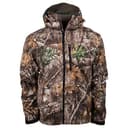
King's Camo Hunter Wind-Defender Fleece Jacket

A wind-blocking fleece from an actual hunting brand, in patterns built for Western and open country. The mid-layer that quietly does most of the work on a cold, breezy sit.

Strengths

  • Wind-Defender membrane blocks the breeze that makes fleece cold
  • Quiet fleece face — good as an outer layer or a heavy mid-layer
  • King's camo patterns suit open and Western terrain

Trade-offs

  • Not waterproof — it is a wind/warmth layer, not a rain shell
  • Runs slim; size up to layer underneath
LayerWind-blocking fleece (mid / outer)
Wind-resistantYes (Wind-Defender)
WaterproofNo

Specs read from the product listing, on September 7, 2026. “Not published” means the maker doesn’t state that figure. The score is our value rating, not a lab test — how we rank.

#3Best cheap answer to the rain shell9.2/ 10 value

Frogg Toggs Classic All-Sport 3-Layer Rain Suit (AS1310)

The default answer for a hunter who does not want to think about rain gear twice. It is a full camo jacket and pant, every seam is taped, and the whole suit costs about what one piece of premium rainwear costs. The fabric is the trade you accept: the maker describes it as quiet and supple, but it is a nonwoven polypropylene rather than a woven shell, and it will not shrug off briars.

Strengths

  • A complete camo outfit — jacket and pants — for roughly what a single budget rain jacket costs
  • Fully seam taped, which is the difference between waterproof and water-resistant and the spec cheap rainwear most often omits
  • Maker describes the nonwoven polypropylene face as quiet and supple, which matters more than pattern when a deer is close
  • Full-length parka cut is stated to fit over the pants so runoff sheds outside the waistband instead of into it

Trade-offs

  • Frogg Toggs publishes a waterproof rating scale on its own site but states no rating for the DriPore Gen 2 fabric in this suit, so there is no number to compare
  • This listing publishes no weight, so you cannot judge what the suit costs you in the pack
  • Nonwoven polypropylene is a sit-and-glass fabric, not a push-through-briars fabric
  • No warranty term is stated on the listing
PiecesJacket + pants
FabricNonwoven polypropylene blend, DriPore Gen 2 middle layer (3 layers)
SeamsFully seam taped
Waterproof ratingNot published
ClosuresAdjustable removable hood, front zip with snap-down storm flap, elastic cuffs, elastic pant waist, adjustable leg openings
Camo patternRealtree APX
Listed weightNot published
Warranty termNot published

Specs read from the product listing, on September 6, 2026. “Not published” means the maker doesn’t state that figure. The score is our value rating, not a lab test — how we rank.

#4Buy this first8.8/ 10 value

Thermajohn Fleece-Lined Base Layer Set

The cheapest upgrade that makes the biggest difference. A fleece-lined base-layer top and bottom under your camo does more for a cold sit than any single outer layer — and it costs less than lunch out.

Strengths

  • Fleece-lined for real warmth against the skin
  • Wicks and stretches so it layers cleanly under camo
  • The highest warmth-per-dollar item on the whole site

Trade-offs

  • Not camo — it is a base layer, worn underneath
  • Cotton-blend feel; a merino layer breathes better on active hunts
LayerBase layer (top + bottom)
LiningFleece
Best useUnder camo, cold sits

Specs read from the product listing, on July 22, 2026. “Not published” means the maker doesn’t state that figure. The score is our value rating, not a lab test — how we rank.

The three jobs, and where the money should go

Premium hunting clothing is sold as a system, and the system idea is correct even when the price tag is not. Three jobs, in order of how much they affect your day:

  • Move sweat off your skin.A base layer. This is the job cheap gear does best, because the mechanism is fabric against skin and there is no membrane to engineer. The Thermajohn set is fleece-lined, stretches and layers cleanly under camo. It is not merino — it is a cotton-blend feel, and merino breathes better on an active hunt — but for a stand sit it is most of the benefit for a fraction of the money.
  • Hold warmth and block wind.A mid or outer fleece. Also a job cheap gear does well, because the physics is trapped air rather than a laminate. The King’s Camo Hunter has a Wind-Defender membrane, which is the thing that stops fleece being cold in a breeze, and it is from an actual hunting brand with patterns built for open country. It is not waterproof and does not claim to be.
  • Keep rain out while letting sweat out.This is the hard one, and it is where the premium money genuinely goes. A waterproof-breathable laminate is a materials-science problem, and you can tell how hard it is by what the budget makers decline to publish — see the next section.

The practical consequence is that a budget kit should put its money into the base and mid layers, where it buys nearly the whole result, and accept a compromise at the shell. Our layering guide works that system through in detail.

The rain shell is where the gap is real

Here is the honest comparison, and it is not flattering to the cheap side.

SITKA states, as its core technology claim, that GORE-TEX “completely seal[s] out rain and snow” while letting sweat escape, and that for “waterproof protection for the most adverse conditions” “no one is trusted more than GORE-TEX.” Notably, SITKA publishes no hydrostatic-head rating or breathability figure on that page either — the claim rests on the GORE-TEX name rather than on a number.

The Frogg Toggs suit on this page is the best cheap answer to the same job and we rank it highly, but the gap is specific: Frogg Toggs publishes a waterproof rating scale on its own site and states no rating for the DriPore Gen 2 fabric in this suit, so there is no figure to compare. What it does publish is more useful than most budget rainwear offers: the suit is fully seam taped, which is the actual difference between waterproof and water-resistant, and the maker describes the nonwoven polypropylene face as quiet and supple, which matters more than pattern when a deer is at fifteen yards.

The real limitation is not the waterproofing, it is the fabric. A nonwoven polypropylene shell is a sit-and-glass fabric, not a push-through-briars fabric. If your hunting involves walking through thorns in the rain, this is the one place on this page where a premium woven GORE-TEX shell is buying you something a budget alternative cannot. Our budget rain gear roundup ranks five options and is blunt about which ones survive cover.

What you give up, in the order you will notice it

  • Weight and packability. Budget garments are heavier for the same warmth and bulkier to stuff in a pack. For a stand hunter who drives to the property, that is a non-issue. For a multi-day backcountry hunt where you carry everything you own, it is the whole ballgame.
  • Fit.Budget cuts are generous rather than athletic, and two of the four picks here carry sizing warnings on their own listings — the TIDEWE suit runs large and the King’s jacket runs slim. A baggy outer layer is noisier and catches a bowstring.
  • The guarantee.This is the clearest gap. SITKA guarantees workmanship for a “Practical Product Lifespan” and will repair wear-and-tear damage at a reasonable cost. Not one of the four picks on this page publishes a warranty term at all — the Frogg Toggs listing states none, and neither do the others. If you wear gear out and want it fixed rather than replaced, that is worth money.
  • Published performance data. No waterproof rating, no fabric weight, no breathability figure on any of these four. You are buying on construction and on what the fabric is, which is workable but is not the same as a spec sheet.

What you do not give up: the pattern

Premium brands compete hardest on camo pattern, and it is the part of the price that matters least. Deer are dichromats — they see colour differently from us, with no functional red reception — so the pattern realism that looks impressive to a human eye in a store is largely a human preference.

What genuinely matters is breaking up your outline, sitting still, and playing the wind. A cheap pattern with disciplined movement beats an expensive pattern with careless movement every time, and that is not a budget-site excuse — it is what what colours deer can see lays out from the research. The one place pattern choice does matter is matching your terrain rather than matching a brand, which is why the King’s Camo patterns suit open and western country while the TIDEWE suit is a timber and stand pattern.

The whole kit, and what it costs

Buy in this order and stop whenever you run out of money, because each step is worth more than the one after it.

  1. Base layer. The Thermajohn set. Cheapest item on the page, biggest single improvement to a cold sit.
  2. Wind-blocking mid or outer.The King’s Camo Hunter, or the TIDEWE suit if you want the bibs too.
  3. Rain shell. The Frogg Toggs suit, with eyes open about briars.

That is a complete cold-weather system for well under what one premium jacket costs, and it is the same argument our budget hunting clothes roundup makes with five picks. If your question is specifically about the other two premium names, the KUIU and First Lite alternatives page covers which pieces in those lineups are genuinely worth the premium and which are not.
Frequently asked questions

What is a good budget alternative to SITKA Gear?

There is no single substitute, because SITKA sells a layering system rather than a garment. Replace it by job: a fleece-lined base layer for moving sweat, a wind-blocking fleece for warmth, and a seam-taped rain suit for weather. Bought from budget brands, those three cost well under what one premium jacket costs and cover most of the result for a stand hunter.

Is SITKA Gear worth the money?

For western backcountry hunting where you carry everything for a week and get rained on in the open, the weight savings, fit and a GORE-TEX shell are genuinely valuable and hard to replicate cheaply. SITKA also guarantees workmanship for a practical product lifespan and will repair wear-and-tear damage at reasonable cost, which no budget maker on this page publishes at all. For stand hunting with a short walk in, most of what you are paying for is weight and packability you will never collect on.

Can budget hunting clothes match GORE-TEX?

Not at the shell. SITKA's claim for GORE-TEX is that it completely seals out rain and snow while letting sweat escape, and a waterproof-breathable laminate is the one layer where materials science costs money. The best cheap answer is a fully seam-taped suit, which is the real difference between waterproof and water-resistant - but the budget maker we rank highest publishes no waterproof rating for its fabric, so there is no number to compare.

Does expensive camo help you kill more deer?

The pattern itself matters far less than the marketing implies. Deer are dichromats and see colour differently from us, so the pattern realism premium brands compete on is largely a human preference. Breaking up your outline, sitting still and playing the wind are what decide encounters. Matching your terrain matters more than matching a brand.

Which premium hunting clothing piece is actually worth buying?

The rain shell, if any. It is the one layer where a woven GORE-TEX garment does something a cheap nonwoven suit cannot - survive being pushed through cover while staying waterproof. Base layers and fleece mid layers are jobs cheap gear does nearly as well, because the mechanism is fabric and trapped air rather than a laminate.

What do you give up buying budget hunting clothes?

Weight, packability, fit and a warranty, roughly in that order. Budget garments are heavier and bulkier for the same warmth, cut generously rather than athletically, and not one of the four picks on this page publishes a warranty term. None of those is a performance problem for a stand hunter; all of them become real on a multi-day backcountry hunt.

Sources

  • GORE-TEX Technology in SITKA Hunting Gear — The premium brand's own account of the one technology that is genuinely hard to buy cheaply. SITKA states that "GORE-TEX acts as a one-way valve that allows sweat and moisture to escape from the inside" "while completely sealing out rain and snow", that for "waterproof protection for the most adverse conditions" "no one is trusted more than GORE-TEX", and that its access to GORE-TEX labs lets it test "waterproofing and durability to biometrics" so its gear can "outperform in the most grueling conditions". On standing behind the product it says "We stand behind every product we make", offering repair or return if you are not satisfied on receipt and repair of wear-and-tear damage "at a reasonable cost". The page publishes no hydrostatic-head rating, no breathability figure and no weight for any garment (accessed November 7, 2026)
  • Product Technology — frogg toggs — The maker's own published rating scales: waterproofing runs 5,000 mm for light conditions, 10,000 mm for mild conditions and 20,000+ mm for extreme conditions, and breathability 5,000 grams per square meter for low activity, 10,000 for moderate and 20,000+ for high intensity — with no numeric rating published for the DriPore Gen 2 fabric itself (accessed September 6, 2026)
  • The Hunter's Guide to Deer Vision — National Deer Association — Deer have two cone photopigments rather than three and no red cone; they see blues and greens well, lack a UV filter, and cannot distinguish orange from red (accessed August 12, 2026)
  • Cold Weather Safety — National Weather Service — Federal cold-weather hazard overview — frostbite, hypothermia and wind chill (accessed July 22, 2026)

Keep reading