Blaze & Budget

Bear Species XT Review

A ready-to-hunt package from a legacy name. What is actually in the box, the one spec that decides whether it fits you, and the hunters who should buy the adjustable bow instead.

By Stephen V.Last updated How we rank

Ready-to-hunt bow packages exist because the accessory bill on a bare bow is brutal. A sight, a rest, a quiver, a stabilizer and a peep bought separately can equal the price of the bow itself, and for a new bowhunter that second invoice arrives as a nasty surprise weeks after the first one.

The Bear Species XT is our top pick in that category, and the reason is unglamorous: it is a genuine hunting bow from a company that has been building them since the 1930s, sold with the accessories already fitted, at a price that leaves money for arrows, a target and a season’s practice. That last part is not a throwaway. The most common way a budget bow purchase fails is that it consumes the entire budget and leaves nothing to actually shoot with.

We do not own this bow and are not claiming to have hunted with it. This review is built from the published specification on the listing, what a ready-to-hunt package can and cannot include, and comparison against the four bows we rank alongside it — our method is here. Where Bear does not publish a figure, we say “not published” rather than filling the gap.

How this is funded:we earn a commission if you buy through our links, at no extra cost to you. It never changes which product we recommend, and we’ll tell you plainly when we’d skip one. Full disclosure.

At a glance

Ranked on price-per-performance — the specs that matter divided by what it costs. Select a row to jump to the full write-up. We have not field-tested these — here is exactly what we do instead.

#ProductDraw / packageScorePrice
1
Bear Archery Species XT Ready-to-Hunt

Bear Archery Species XT Ready-to-Hunt

Best hunting-ready bow overall

A real hunting bow from a legacy brand, sold ready-to-hunt with sight, rest, quiver and stabilizer. Everything you need to be shooting this weekend, at a price that leaves money for arrows and a target.

Up to 70 lb, RTH
9.1/ 10
$439.99View on Amazon

$499.9912% off

Price as of September 5, 2026. #ad How we’re funded

The full review

#1Best hunting-ready bow overall9.1/ 10 value

Bear Archery Species XT Ready-to-Hunt

A real hunting bow from a legacy brand, sold ready-to-hunt with sight, rest, quiver and stabilizer. Everything you need to be shooting this weekend, at a price that leaves money for arrows and a target.

Strengths

  • Complete ready-to-hunt package — no separate accessory bill
  • Up to 70 lb draw with a legitimate hunting speed
  • Bear's name and warranty behind it

Trade-offs

  • Heavier than premium flagships (a non-issue for stand hunting)
  • Factory-set draw length limits fine-tuning without a press
Draw weightUp to 70 lb
PackageReady-to-hunt (sight, rest, quiver)
Hand optionsRight / left

Specs read from the product listing, on July 22, 2026. “Not published” means the maker doesn’t state that figure. The score is our value rating, not a lab test — how we rank.

What Bear actually publishes

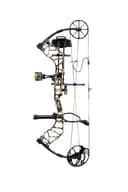
The Species XT is sold as a ready-to-hunt configuration: a compound bow with a sight, arrow rest, quiver and stabilizer already fitted, available in right and left-hand versions, with draw weight quoted up to 70 pounds. Three of those facts carry the whole review — the package contents, the 70-pound top end, and, importantly, what the draw length arrangement means for fit.

The package is the product

Take the accessory list seriously, because it is where the value sits. Bought individually, a serviceable multi-pin sight, a containment rest, a five-arrow quiver and a stabilizer represent a substantial fraction of what this bow costs complete. Buying them bundled means you spend one amount, once, and go shooting.

The caveat that applies to every RTH package: bundled accessories are entry-grade. The sight will not have the micro-adjustment of a standalone unit, and the rest is a workhorse rather than a precision instrument. That is the correct trade for a first bow. They function, they are set up already, and you can upgrade individual pieces later as you find out what you actually care about — which is a far better way to spend money than guessing up front.

Seventy pounds is a ceiling, not a target

“Up to 70 lb” is a marketing headline that new bowhunters consistently misread as a recommendation. It is not. Seventy pounds is more than deer hunting requires, and shooting more poundage than you can draw smoothly and hold steady is the most common cause of bad form, target panic and a season of frustration.

Most states set a legal minimum in the region of 35 to 40 pounds for deer, and any modern compound in the 50 to 60-pound range is comfortably lethal on whitetail with a properly matched arrow and a sharp head. Back the limb bolts out, shoot a weight you can draw without lifting the bow skyward, and add poundage as your strength builds. Our guide to what draw weight you actually need covers the legal side and the energy math.

The factory draw length is the real limitation

This is the single most important thing to understand before buying, and it is the honest weakness of the bow.

Draw length is not a preference; it is a measurement of you. A bow set an inch too long forces you to over-extend and lock your bow arm, which costs accuracy and invites string slap. Set too short, you lose power stroke and consistency. Getting it right is more important to your shooting than any accessory in the package.

On this bow the draw length is factory set, and adjusting it is not a hex key job the way it is on the fully adjustable bows we rank alongside it — it generally requires a press and a shop. If your draw length falls in the range the bow ships in, that is a non-issue and you have a bow that fits from day one. If it does not, or if you are buying for a teenager who is still growing, this is the wrong bow and you should buy adjustable instead. Measure your draw length before you order, not after.

Where it is genuinely beaten

Adjustability. Bows in this bracket that adjust across a wide draw-length and draw-weight range with a hex key are unquestionably the better buy for a growing shooter, a household sharing one bow, or anyone unsure of their measurements. That flexibility is worth real money and this bow does not have it.

Weight.It is heavier than a premium flagship. For stand and blind hunting that is close to irrelevant — you carry it a short distance and then hang it up. For a spot-and-stalk hunter covering miles of western public land, mass matters more, and this is not the bow for that hunt.

Absolute price. It is not the cheapest way to start shooting. A bare bow or a very low-cost complete package costs less up front. What you give up going that direction is either the accessory bill arriving later, or component quality low enough that you replace it within two seasons.

Three buyers who should choose differently

  • Anyone whose draw length is outside the factory setting. Buy an adjustable bow. Fit beats brand.
  • Youth and growing shooters. A bow that adjusts across a wide range grows with the shooter and lasts several seasons instead of one.
  • Anyone who only wants to shoot targets.The hunting-specific parts of the package — the quiver, the hunting sight — are cost you will not use.

What it still costs after the box

Ready-to-hunt does not mean ready to hunt, and budgeting as though it does is how bowhunters end up unable to shoot in October. Plan for:

  • Arrows, cut and fitted to your draw length.Half a dozen, matched to your poundage. This is not optional and it is not a place to buy the cheapest thing available — arrow spine needs to match the bow.
  • A release aid, unless the package includes one.
  • A target you can shoot into at home. The single highest-value accessory in archery, because practice frequency is what makes you lethal.
  • Broadheads, and the practice heads to confirm where they hit. See fixed versus mechanical for which type suits your poundage.
  • A shop setup session, if you are new. Having peep height, nock point and sight set correctly by someone who has done it a hundred times is cheap and saves a month of confusion.

The verdict

Buy it if your draw length matches the factory setting, you hunt deer from stands or blinds, and you want one purchase that puts you on a target this weekend rather than a bow plus a shopping list. The components are entry-grade and honestly so; the bow underneath them is a real hunting bow from a company with a warranty and a reputation to protect, and the price leaves you enough for arrows and range time — which is what actually kills deer.

Do not buy it if your draw length is uncertain, if the bow has to fit more than one person, or if you are buying for someone still growing. In those cases the adjustable bows in our full rankings are the better purchase, and it is not close.
Check your state’s regulations. Hunting laws vary by state and change year to year — legal calibers, minimum bow draw weights, blaze-orange rules, seasons and treestand requirements included. Confirm the rules with your state wildlife agency before you hunt. Blaze & Budget is written by an enthusiast, not a game warden, and nothing here is legal advice.

Frequently asked questions

Is the Bear Species XT good for beginners?

Yes, with one condition: your draw length has to match the factory setting. It arrives with the sight, rest, quiver and stabilizer already fitted, which removes both the accessory bill and the setup guesswork that overwhelm most new bowhunters. Where it is less beginner-friendly is fit — the draw length is factory set rather than hex-key adjustable, so if you are unsure of your measurement or buying for someone still growing, an adjustable bow is the safer purchase.

What comes with the Bear Species XT ready-to-hunt package?

The published package includes a sight, arrow rest, quiver and stabilizer fitted to the bow, in right or left-hand configuration. What it does not include is everything you need to actually hunt: arrows cut to your draw length and matched to your poundage, a release aid, a target to practice into, and broadheads. Budget for those separately — a ready-to-hunt bow with no arrows is not ready to hunt.

What draw weight should I set the Species XT to?

Whatever you can draw smoothly, without lifting the bow skyward, and hold steady for several seconds. For most adults new to archery that is somewhere in the 50 to 60-pound range, not the 70-pound ceiling on the box. Modern compounds in that range are comfortably lethal on whitetail with a matched arrow and a sharp broadhead, and most states set legal minimums far lower. Back the limb bolts out and add weight as your strength builds.

Can you adjust the draw length on the Bear Species XT?

Not the way you can on the fully adjustable bows in the same price bracket, which change draw length with a hex key across a wide range. Adjusting this bow's draw length generally means a press and a shop visit. That makes measuring your draw length before you order essential. If your measurement falls inside the range the bow ships in, this is not a problem; if it does not, buy an adjustable bow instead.

Is a ready-to-hunt package bow good enough to actually hunt with?

The bow is. The accessories are entry-grade and honestly priced as such — the sight will lack the micro-adjustment of a standalone unit and the rest is a workhorse rather than a precision component. Neither will stop you killing a deer inside normal bow ranges. The sensible approach is to hunt the package as it comes, find out over a season which component actually annoys you, and upgrade that one piece rather than guessing in advance.

How much should I budget beyond the bow itself?

Plan on a meaningful additional amount for arrows cut and matched to your setup, a release aid if one is not included, a home target, and broadheads plus practice heads. The target is the highest-value item on that list, because shooting frequency is what makes you accurate and a target at home turns practice from an outing into a habit. A shop setup session is also worth the money if this is your first bow.

Sources

Keep reading